

Disclosure: We are reader-supported. If you buy through links on our site, we may earn a commission. Learn more.
Bri Teresi joined IncomeInsider TV to discuss a topic that is becoming harder for Americans to ignore: who really controls your money in a rapidly changing digital economy?
Known by many first for her work in modeling and golf media, Teresi has increasingly become a voice in conversations around sound money, crypto, privacy, and personal liberty.
She is also the host of Free the Money, a YouTube show focused on many of those same themes, including financial sovereignty, digital assets, and the broader fight for personal freedom in an increasingly centralized world.
In her interview with host Sam Laliberte, she laid out a worldview that blends precious metals, digital assets, and a growing skepticism of centralized control. For readers concerned about inflation, surveillance, and the future of financial independence, the conversation offered plenty to think about.
Watch the full interview below:
This Hidden Market is Where Crypto Millionaires are Made (Not Coinbase)
This is where hedge funds and institutions are quietly investing - where tokens can gain up to 957X before the masses even know they exist.

From Modeling and Golf to Sound Money and Crypto
Teresi’s path into financial commentary was not the typical one. While many viewers may know her from modeling and golf, she explained that her interest in money and economics started much earlier. She credited her family, especially her grandfather, for teaching her about gold, silver, the Federal Reserve, and the long-term effects of currency debasement from a young age.
That early exposure appears to have shaped much of her current thinking. Rather than seeing money as just something to earn and spend, Teresi described growing up around ideas like real asset ownership, generational wealth, and financial independence. That foundation later pulled her toward crypto and alternative financial systems, even as her public career initially took her in a different direction.
One of the more revealing moments in the interview came when she described a crossroads in her life. Instead of staying fully committed to the world that had already brought her success, she chose to lean harder into the digital asset and freedom-oriented space. In her telling, it was less about chasing a trend and more about moving toward values she already held.
A Conservative Case for Financial Sovereignty
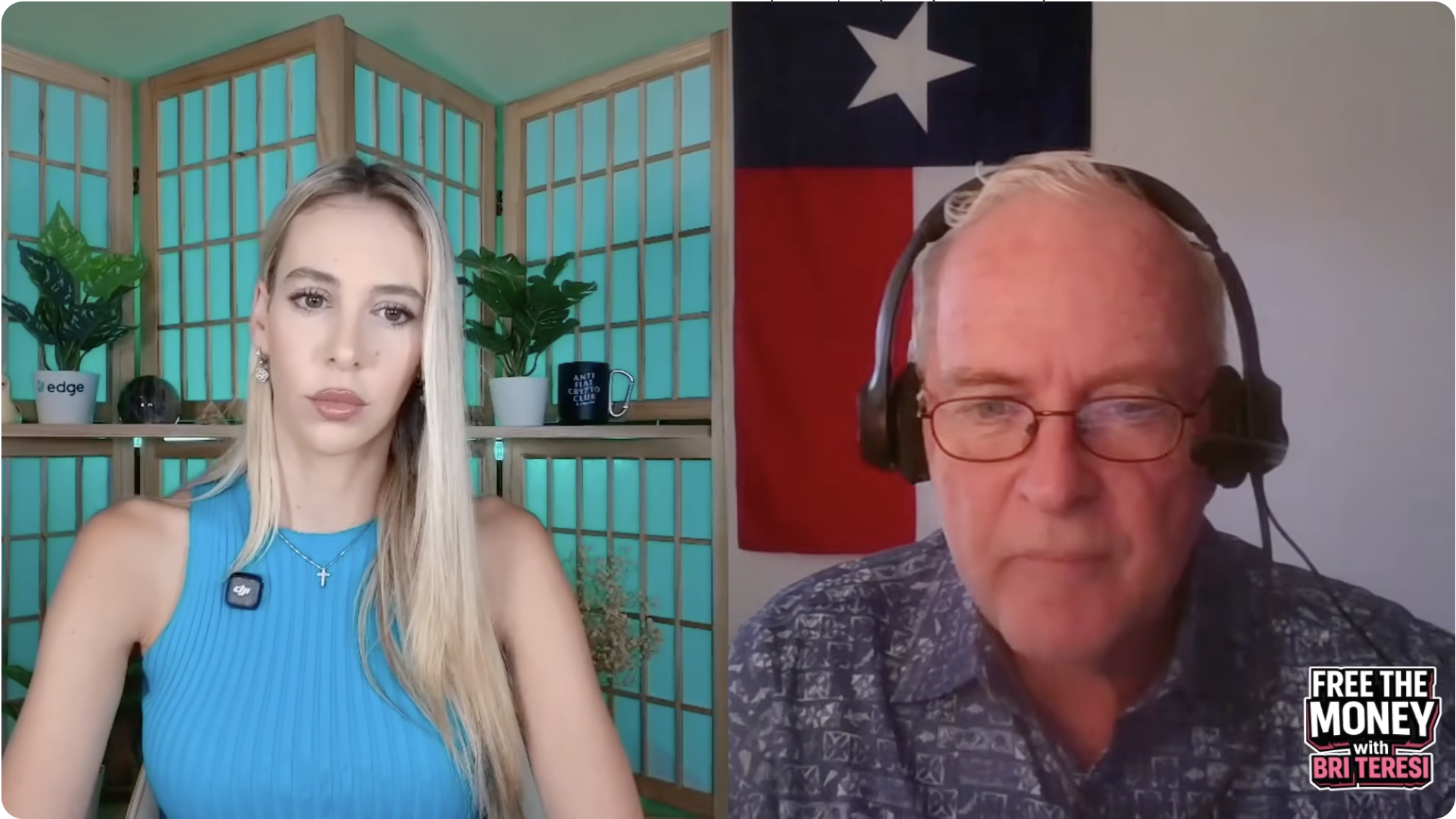
Bri Teresi with Dr. Jim Willie on her 'Free the Money' YouTube show.
A major theme of the interview was sovereignty. Teresi returned repeatedly to the idea that Americans are giving up too much control over both their money and their lives. In her view, dependence on centralized institutions, whether banks, social platforms, or future AI systems, carries risks that many people still underestimate.
That message is likely to resonate with many Americans. Conservatives have long warned that concentrated power, whether in government or giant corporations, eventually gets used against ordinary people.
Teresi’s argument fits squarely within that tradition. She framed financial sovereignty not as a niche crypto slogan, but as a practical response to a world where convenience increasingly comes at the cost of control.
Her concerns were not limited to banking. She also connected the dots between social media censorship, frozen payments, data harvesting, and the broader digital economy. The implication was clear: if individuals do not own their platforms, their money, or their data, then they are operating inside systems they do not truly control.
Related: Collin Plume Explains Gold Price Volatility on IncomeInsider TV
Why Silver Still Matters
For all the attention crypto gets, Teresi made the case that silver remains one of the most practical entry points for people who want to build real-world resilience. She pointed to silver’s role in industry, technology, AI infrastructure, and national security, arguing that it remains undervalued by many everyday savers.
That point is important. In a time when many Americans are drawn to flashy headlines and speculative trades, Teresi’s remarks were a reminder that hard assets still matter. Silver is tangible, historically recognized, and outside the digital financial system. For people uneasy about inflation, systemic debt, or the fragility of modern finance, that makes it compelling.
She also emphasized consistency over hype. Rather than presenting precious metals as a get-rich-quick story, she spoke favorably about the idea of regularly buying small amounts over time. That kind of disciplined accumulation may not be exciting, but it is far more aligned with long-term wealth preservation than the speculative behavior often promoted online.
Related: Gold IRA Rollover Guide
Crypto and Precious Metals Are Not Enemies
One of the more interesting takeaways from the interview was Teresi’s refusal to treat crypto and precious metals as competing camps. Too often, these communities act as if investors must choose between digital assets and hard money.
Teresi argued the opposite. In her view, both can play important roles because both appeal to people who value scarcity, independence, and resistance to centralized manipulation.
That is a useful framing for readers who are trying to make sense of both markets. Gold and silver offer a long track record as stores of value. Crypto, particularly projects focused on utility and privacy, offers a new set of tools for transacting and opting out of legacy systems.
For those worried about the long-term direction of fiat currency and centralized finance, holding some combination of both may make more sense than treating them as ideological opposites.
Teresi suggested that tribalism is one reason the overlap remains smaller than it should be. That may be true not just in crypto, but across the broader financial landscape. Americans are often pushed toward all-or-nothing thinking when a more balanced approach would likely serve them better.

The Secure Way to Buy and Sell Crypto...

Overall Rating:
Why iTrustCapital?
Self-Custody and the Real Meaning of Ownership
Another core issue in the conversation was self-custody. Teresi stressed that buying crypto on an exchange is not the same as truly owning it. If someone else controls the keys, then someone else ultimately controls the asset.
That may sound technical, but the principle is simple enough: ownership only matters if you can actually access and control what you own.
This is where crypto becomes more than a trade. Teresi argued that the original purpose of crypto was not just speculation, but removing middlemen and giving people more direct authority over their own financial lives.
That vision has often been drowned out by memecoins, scams, and hype cycles, but the underlying principle remains important.
She also acknowledged the reality that self-custody still intimidates many beginners. Seed phrases, wallet security, hacks, and technical friction are genuine barriers.
That is one reason so many people leave assets on exchanges. Still, Teresi’s warning was that convenience should not be mistaken for safety. Time and again, centralized platforms prove that access can be frozen, funds can disappear, and terms can change overnight.
Related: Decentralized Masters Review - Inside Look at the DeFi Educational Platform
The Danger of a Fully Centralized Digital Future
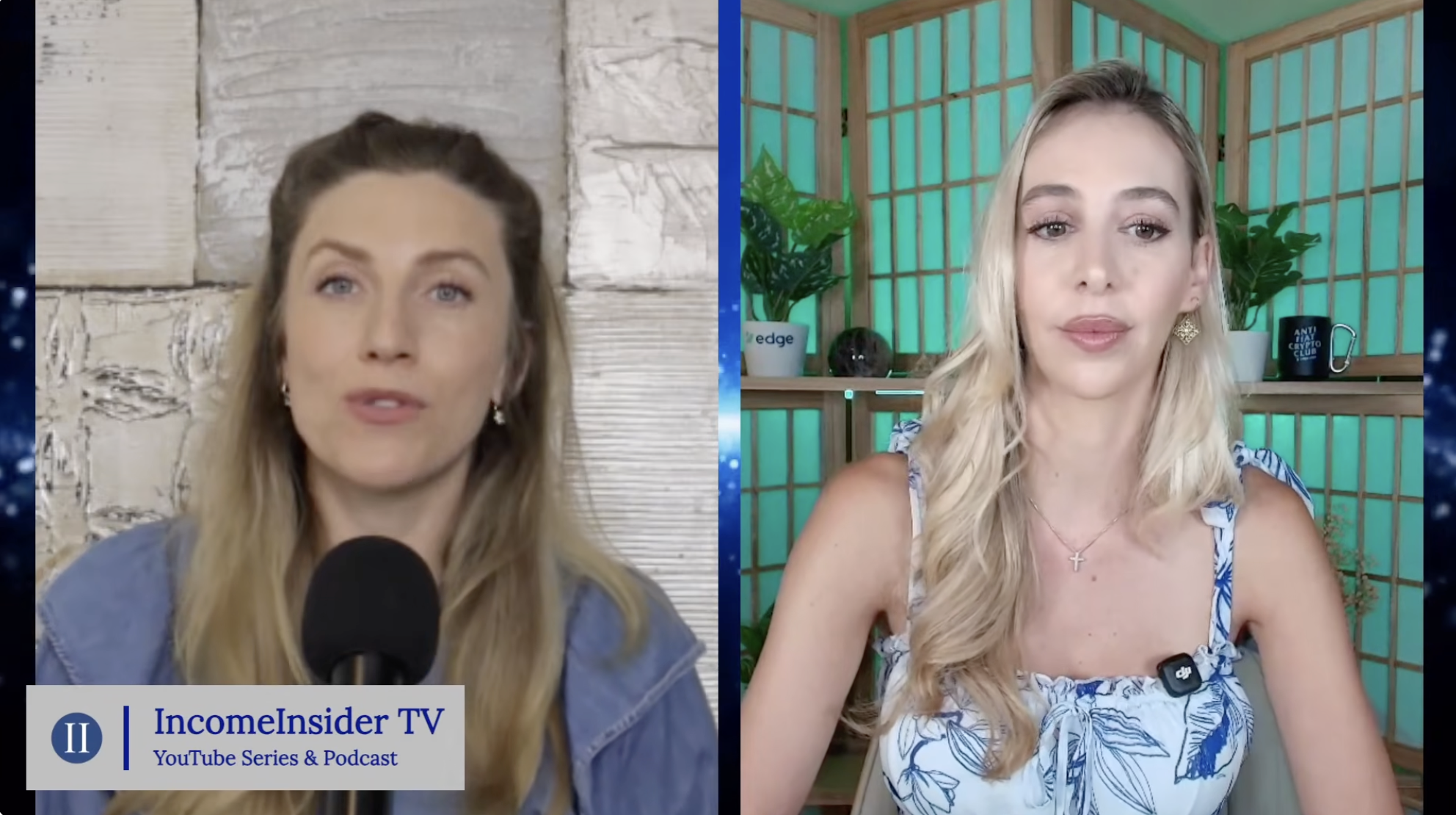
Sam Laliberte with Bri Teresi on IncomeInsider TV
The conversation also moved into AI, surveillance, and what Teresi sees as the risk of a more tightly controlled digital future. She expressed concern that Americans are steadily surrendering privacy and autonomy to both governments and private companies, often in exchange for speed and convenience.
This is where the interview moved beyond investing and into culture. Teresi argued that the same instincts that lead people to question fiat money should also lead them to question centralized AI systems, digital identity frameworks, and efforts to regulate online access in the name of safety.
Her broader point was that the erosion of freedom rarely happens all at once. It comes gradually, through systems that are marketed as helpful, efficient, or protective.
Many listeners will likely find that line of argument familiar. The real issue is not whether technology is useful. Of course it is. The issue is whether people are paying attention to the price of that convenience and whether they still have meaningful room to opt out.
Related: Goldco Review - Best for Gold and Silver?
Building Parallel Systems Instead of Complaining About the Old Ones
One of the more optimistic parts of the interview was Teresi’s discussion of parallel economies and real-world communities built around shared values.
Rather than simply criticizing the existing system, she highlighted the importance of building alternatives. That includes crypto-based payment tools, privacy-focused projects, and smaller communities where people can live more aligned with their principles.
Whether every reader agrees with that vision or not, there is something undeniably appealing about it. Many Americans feel boxed into systems they no longer trust. The idea of creating smaller, freer, more accountable networks, financial and otherwise, speaks to a broader desire for self-government and local resilience.
This may be especially relevant as faith in national institutions continues to weaken. If more Americans feel they cannot rely on Washington, Silicon Valley, or Wall Street to protect their interests, they may increasingly look for parallel structures that restore a sense of agency.
A Message to Women: Learn, Invest, and Take Control
Teresi also made a point of encouraging more women to become confident investors and decision-makers in their own financial lives. Her message was not anti-family or anti-tradition. It was that women should not feel intimidated by subjects like crypto, investing, or precious metals simply because those spaces are often male-dominated.
That is a useful reminder. Financial literacy should not be treated as a niche interest. In an economy marked by inflation, debt, volatility, and rapid technological change, more Americans need to understand how money works and how to protect themselves.
Teresi’s comments suggested that empowerment starts with curiosity, research, and the willingness to make mistakes while learning.
The Bigger Picture
At its core, this was not just an interview about crypto. It was about independence.
Teresi’s worldview blends old and new. She believes in silver, skepticism toward the Federal Reserve, the value of real ownership, the promise of decentralization, and the need to defend individual freedom in an age of digital control.
Not every reader will agree with every conclusion she reaches, but the larger theme is hard to dismiss: Americans who want more control over their future may need to think differently about money, technology, and the systems they rely on every day.
For many readers, that message should land. The battle over money is no longer just about rates, inflation prints, or portfolio returns. It is also about freedom, privacy, and whether ordinary people will still have the ability to chart their own course in the years ahead.
If Bri Teresi’s appearance on IncomeInsider TV showed anything, it is that those questions are no longer fringe. They are becoming central.
This Hidden Market is Where Crypto Millionaires are Made (Not Coinbase)
This is where hedge funds and institutions are quietly investing - where tokens can gain up to 957X before the masses even know they exist.