


Disclosure: We are reader-supported. If you buy through links on our site, we may earn a commission. Learn more.
Morgan Stanley’s Chief Investment Officer Mike Wilson is challenging one of the most time-tested formulas in investing. For decades, the 60/40 portfolio—60% equities and 40% bonds—has been the bedrock of retirement planning and institutional asset allocation.
But with inflationary pressures, volatile interest rates, and growing doubts about bonds’ ability to hedge risk, Wilson is advocating for a new model: the 60/20/20 portfolio, where gold replaces half the traditional bond allocation.
Wilson argues that gold now offers stronger downside protection and inflation-hedging power than Treasuries, marking a notable shift in how Wall Street’s top strategists view the role of precious metals in modern portfolios.
Buy Physical Gold with Your 401(k) or IRA
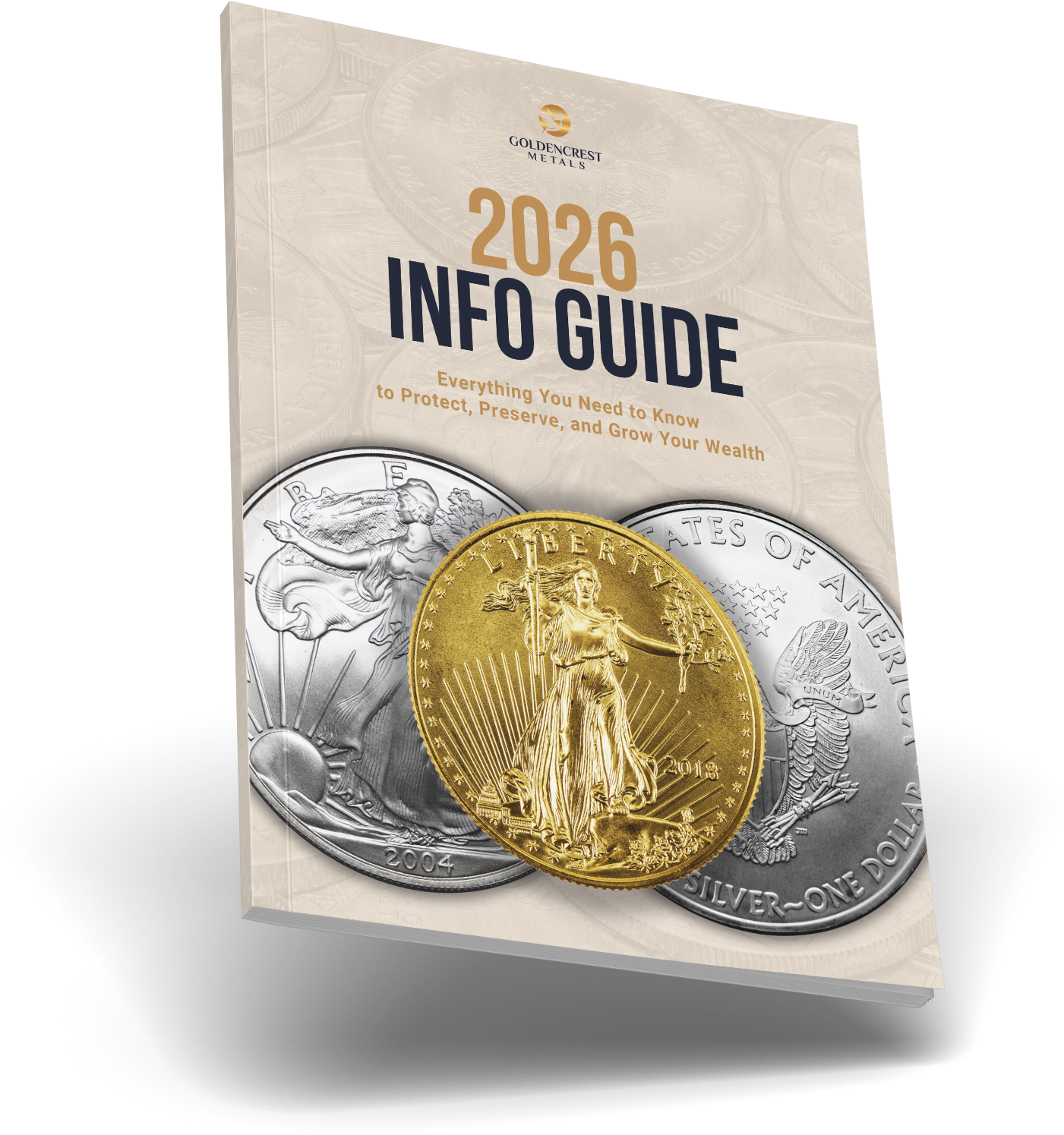
Free Guide from GoldenCrest Metals Reveals How to Buy Physical Gold & Silver with Your Retirement Savings.
(888) 733-5012

The Traditional 60/40 Portfolio Model
For much of the last half-century, the 60/40 portfolio has been considered the “gold standard” for long-term investors. The idea was simple: hold 60% of assets in stocks for growth, and 40% in bonds for stability and income.
This balance provided a relatively smooth ride through decades of market cycles, as bonds typically rose when stocks fell, cushioning losses and preserving wealth.
The approach worked particularly well in the era of falling interest rates that began in the 1980s. As yields declined, bond prices climbed, providing strong returns while also acting as a reliable hedge against equity volatility. Financial advisors, pension funds, and everyday retirement savers came to rely on 60/40 as a trusted formula.
But today’s environment looks very different. After years of near-zero interest rates, inflation has re-emerged, government debt has surged, and bonds have struggled to deliver the same diversification benefits.
In some downturns, equities and Treasuries have even moved in the same direction, undermining the traditional hedge that 60/40 investors once counted on.
Related: How to Add Physical Gold and Silver to Your IRA or 401(k)
The Case for 60/20/20
Mike Wilson’s 60/20/20 proposal seeks to address these shifting dynamics. Instead of relying on bonds to serve as the primary hedge against equity downturns, Wilson suggests allocating:
- 60% to equities for long-term growth,
- 20% to bonds, but with a focus on shorter-duration Treasuries to limit interest rate risk, and
- 20% to gold as the new core hedge against inflation, volatility, and systemic shocks.
By cutting the bond exposure in half and boosting gold’s role, Wilson is making a bold statement: the assumptions underpinning the 60/40 model may no longer hold.
In a climat of heightened geopolitical risk, persistent inflationary pressures, and questions about U.S. fiscal stability, he argues that gold provides the kind of ballast bonds once did.
This new allocation doesn’t abandon fixed income entirely. Bonds still offer income and relative stability, but by shifting from long-duration Treasuries to shorter maturities, investors may reduce sensitivity to sudden interest rate spikes while maintaining flexibility.
The 20% gold allocation, meanwhile, introduces an asset that historically performs well when traditional hedges falter.
Why Gold Over Treasuries?
At the heart of Wilson’s recommendation is the idea that gold now offers a more reliable hedge than U.S. Treasuries.
For decades, investors counted on bonds to rise in value when equities stumbled, but that relationship has weakened. In recent years, periods of equity market stress have often coincided with bond losses, especially when inflation is the driving force.
Gold, by contrast, tends to behave differently. While it produces no yield, it has historically preserved purchasing power during times of monetary debasement, fiscal uncertainty, or negative real interest rates.
Wilson highlights this dynamic as a reason to elevate gold from a peripheral diversifier to a core 20% allocation.
Another key factor is the U.S. debt picture. With government borrowing at record levels and the Federal Reserve’s path for interest rates uncertain, Treasuries are no longer viewed as the unquestioned safe-haven they once were.
Gold, which carries no counterparty risk, offers a hedge against both inflation and potential instability in the bond market itself.
By recommending shorter-duration Treasuries for the bond slice and assigning a major role to gold, Wilson is changing the conversation on what a “balanced” portfolio means in today’s environment.
Buy Physical Gold with Your 401(k) or IRA
Free Guide from GoldenCrest Metals Reveals How to Buy Physical Gold & Silver with Your Retirement Savings.
(888) 733-5012
Opportunities and Advantages of 60/20/20
The appeal of the 60/20/20 strategy lies in its attempt to adapt to today’s market realities while still preserving balance. By diversifying across equities, bonds, and gold, the portfolio aims to capture growth, generate income, and hedge against shocks.
One advantage is improved inflation protection. Gold has historically performed well during periods when inflation erodes the value of fixed-income assets, offering a counterweight to both equities and bonds. By increasing gold’s allocation to 20%, investors may be better insulated from purchasing-power risk.
Another benefit is lower interest-rate sensitivity. Shifting the bond allocation toward shorter maturities reduces exposure to sharp swings in long-term rates. That means less drag if rates rise unexpectedly and greater flexibility to reinvest as yields adjust.
Finally, the strategy enhances diversification. Gold’s low correlation with both equities and bonds can help smooth out returns, particularly during crises when traditional asset classes move in tandem.
For investors wary of relying too heavily on bonds for protection, this mix may offer greater resilience.
Related: Diversify Your 401(k) with Physical Gold and Silver (Tax Free)
Risks and Criticisms
While the 60/20/20 allocation has clear appeal, it isn’t without drawbacks. The most obvious is that gold generates no income. Unlike bonds, which pay interest, gold sits idle unless prices rise. For income-focused investors, particularly retirees, replacing bonds with gold could reduce the portfolio’s cash flow.
There’s also the issue of volatility. Gold prices can swing sharply, influenced not just by inflation and rates but also by global politics, currency movements, and investor sentiment. A larger allocation could expose portfolios to bigger short-term drawdowns.
Another concern is opportunity cost. If inflation cools and interest rates fall, bonds may rebound strongly. In that scenario, investors holding less fixed income and more gold might underperform traditional 60/40 portfolios.
Finally, there are practical considerations. Depending on how gold is owned—through ETFs, futures, or physical bullion—there can be added costs such as storage fees, fund expenses, or less favorable tax treatment compared to stocks and bonds.
In short, while 60/20/20 reflects today’s risks, it also introduces new ones that investors must weigh carefully.
What It Means for Investors
For everyday retirement savers, Wilson’s 60/20/20 proposal is less about adopting a rigid formula and more about adjusting to today’s evolving market environment.
The message is clear: relying solely on bonds as the traditional hedge may no longer be sufficient in an era of elevated inflation, heavy government borrowing, and volatile interest rates.
That doesn’t mean everyone should rush to sell bonds and buy gold. Personal circumstances matter. A retiree seeking steady income may still value the predictability of fixed income, while a younger investor with a longer horizon may be more comfortable holding a larger share in equities.
The key is understanding that diversification can no longer be defined in the same way it was 20 or 30 years ago.
For financial advisors, the 60/20/20 framework may serve as a useful conversation starter with clients who are concerned about inflation or skeptical of bonds.
Even if investors don’t adopt the exact allocation, the broader takeaway is that gold is being recognized by major Wall Street voices as a core asset, not just a side allocation.
Related: Overpriced Gold Scam - Beware 'Exclusive' Gold and Silver Coins
Gold's Role in Your 401(k)
Morgan Stanley CIO Mike Wilson’s call for a 60/20/20 portfolio highlights the growing recognition that the old rules of portfolio construction may no longer apply.
By elevating gold to a core allocation alongside equities and bonds, he’s signaling a broader shift in how retirement savers should think about diversification and risk management.
The traditional 60/40 model thrived in an era of disinflation and falling interest rates. Today’s environment—marked by persistent inflation, heavy government debt, and geopolitical uncertainty—demands a fresh look at portfolio resilience.
For Wilson, gold is no longer just an optional hedge, but a central pillar of defense against volatility and erosion of purchasing power.
Whether or not 60/20/20 becomes the new standard, the takeaway is clear: investors must be willing to rethink conventional wisdom and adapt their long-term retirement saving strategies to a changing world.
Buy Physical Gold with Your 401(k) or IRA
Free Guide from GoldenCrest Metals Reveals How to Buy Physical Gold & Silver with Your Retirement Savings.
(888) 733-5012