

Disclosure: We are reader-supported. If you buy through links on our site, we may earn a commission. Learn more.
Gold has been on a historic run, pushing to new all-time highs before pulling back sharply and triggering a wave of dramatic headlines.
Some called it a crash. Others saw it as a long-overdue correction. Silver followed the same pattern, falling fast and then rebounding just as quickly.
For retirement savers watching from the sidelines, the volatility has raised familiar questions. What actually caused the drop?
Did something break in the precious metals market, or was this a normal reset after an extended rally? And how should long-term savers think about moments like this without letting short-term noise drive long-term decisions?
To help make sense of it, IncomeInsider TV sat down with Collin Plume, founder and CEO of Noble Gold Investments. With more than 17 years in the precious metals industry, Plume has seen multiple bull markets, corrections, and the emotional reactions that come with both.
In the conversation, Plume breaks down what likely drove the recent pullback, why silver is increasingly viewed as a strategic metal, how Federal Reserve headlines can distort short-term market reactions, and what retirement savers should focus on when markets turn volatile.
Watch the Full Interview
Below is the full IncomeInsider TV conversation with Collin Plume. If you want the complete context, this is worth watching straight through.
Protect Your Wealth with Gold & Silver

Free Guide Reveals Strategies to Buy Physical Gold & Silver with Your IRA or 401(k).

For those who prefer to read, the sections below break down the key themes from the discussion and explain what they mean in plain English, with a focus on long-term retirement savers rather than short-term traders.
Crash or Correction? How Collin Interprets the Pullback
One of the first things Collin addressed was the framing itself. Calling the move a “crash” implies that something fundamentally broke. In his view, that’s not what happened.
Gold had climbed above $5,000 an ounce. Silver surged to levels that few people expected to see so quickly. Moves like that rarely cool off gently. When prices run hard and fast, even a small shift in market mechanics can trigger outsized reactions.
Collin compared the recent pullback to what he saw during the 2008–2011 metals cycle. Back then, silver climbed roughly 200 percent before pulling back sharply. The correction felt extreme in the moment, but prices were still dramatically higher than where the move began.
This time, he pointed to structural forces rather than panic selling. Higher margin requirements made it more expensive for traders to hold leveraged positions, forcing liquidations. That kind of selling can cascade quickly, even if long-term demand hasn’t changed.
What mattered more to him was what happened after the drop. When silver dipped into the $80 range, buyers stepped back in almost immediately. Prices rebounded sharply, suggesting that underlying demand was still very much alive.
For long-term savers, the takeaway is straightforward. Violent pullbacks feel unsettling, but after historic runs, they are often part of the process rather than a sign that the thesis has collapsed.
Visit Noble Gold's Website to Learn More.
Why Silver’s Move Was Different This Time
Collin believes silver deserves special attention in this cycle, not just because of price action, but because of how governments are treating it.
In the interview, he explained that both the United States and China have begun treating silver as a strategic metal. That designation matters. When governments view a metal as strategic, it’s no longer just an investment vehicle. It becomes a resource they actively need for industrial, technological, and military purposes.
Silver plays a role in everything from electronics and energy infrastructure to defense applications. According to Collin, once governments step into the market as consistent buyers, the dynamics change. Demand becomes less sensitive to price and more tied to necessity.
He also pointed out that China is one of the largest players in the global silver market, accounting for a significant share of supply moving through international channels. When major producers and consumers both classify silver as strategic, volatility can increase, but so can long-term demand pressure.
From that perspective, the sharp pullback raised an important question. Who benefits most from lower prices? Collin’s view is that large institutional buyers and governments have a strong incentive to accumulate silver on dips rather than chase higher prices.
The fast rebound following the selloff supported that idea. Heavy buying returned once prices reset, reinforcing his belief that silver’s role in the global economy is expanding, not shrinking.

Fed Chair Headlines and Short-Term Market Confusion
A lot of the media coverage around the pullback tied the move to speculation about the next Federal Reserve chair and whether a new appointment would take a tougher stance on inflation and interest rates. In the short term, that narrative rattled markets.
Collin was blunt about it. He doesn’t believe that storyline holds up under scrutiny.
From his perspective, the idea that a new Fed chair would suddenly move rates higher runs directly against the political and economic incentives already on the table. He pointed out that President Donald Trump has been vocal for months about wanting lower rates to stimulate the economy, support real estate, and ease pressure on borrowers.
Against that backdrop, the assumption that a nominee like Kevin Warsh would come in aggressively hawkish simply didn’t make sense to him.
More importantly, Collin stressed the difference between short-term reactions and long-term reality. Headlines can move markets for days or weeks, but they don’t change structural issues like government debt levels, currency supply, or the global appetite for U.S. Treasuries.
In his view, short-term volatility driven by Fed speculation often creates noise that distracts investors from the bigger picture. Rate cuts, currency pressure, and continued stimulus tend to favor hard assets over time, even if the path getting there isn’t smooth.
For retirement savers, his message was clear. Don’t let a single headline convince you that the entire landscape has shifted overnight. Monetary policy narratives change quickly. Debt and currency trends do not.
Click Here to Download Collin Plume's Free Gold & Silver Guide.
The Dollar, Debt, and the Long-Term Case for Metals
When the conversation shifted to the longer-term outlook, Collin focused less on personalities at the Fed and more on structural pressures facing the U.S. dollar.
He pointed to rising national debt, persistent budget deficits, and repeated government shutdown threats as signs that the system is relying more on borrowing than balance. In simple terms, each extension of spending without resolution pushes the debt burden higher and increases pressure on the currency.
Collin also highlighted a trend he believes is underappreciated: central banks gradually reducing their exposure to U.S. Treasuries. While the dollar still plays a dominant role globally, fewer countries are willing to concentrate as much of their reserves in U.S. debt as they once did.
That shift creates a problem. If traditional buyers of U.S. debt step back, yields have to rise to attract new buyers, or the burden shifts elsewhere. Neither outcome is particularly friendly to a strong currency.
Against that backdrop, gold plays a familiar role. It doesn’t rely on the creditworthiness of a government or the policies of a central bank. As confidence in fiat systems fluctuates, gold tends to benefit from its status as a neutral reserve asset.
Silver, in Collin’s view, adds a second layer to that story. It isn’t just a monetary hedge. It’s also a metal with growing industrial and strategic demand, which can amplify price movements when supply tightens.
Taken together, he sees the dollar story and the metals story moving in opposite directions over the long run. Even if prices cool temporarily, the underlying forces pushing investors and governments toward hard assets remain intact.
Protect Your Wealth with Gold & Silver
Free Guide Reveals Strategies to Buy Physical Gold & Silver with Your IRA or 401(k).
What This Means for Retirement Savers Watching the Volatility
One of the most important parts of the conversation was how Collin framed all of this for everyday retirement savers, not traders.
Gold and silver are often described as “safe haven” assets that move slowly and predictably. The recent price action clearly challenged that assumption. Collin acknowledged that metals can be volatile, especially during periods of transition in monetary policy and global demand.
His response wasn’t to dismiss the volatility, but to reframe its purpose.
From his perspective, precious metals aren’t meant to replace every other investment. They’re meant to sit alongside stocks, real estate, and cash as part of a diversified strategy. When one area struggles, another may provide stability or liquidity.
He also emphasized simplicity. Physical metals are owned outright. They aren’t shares of a fund or layers of exposure stacked on top of each other. That direct ownership is increasingly appealing to people who feel their portfolios have become too complex or too dependent on financial intermediaries.
For retirement savers, the takeaway wasn’t “buy because prices dipped.” It was more foundational than that. Understand why you might want metals in the first place. If that reason still holds, short-term volatility becomes something to manage emotionally, not something that invalidates the strategy.
Related: Download Noble Gold's Free Gold & Silver Guide
Emotions, FOMO, and the Trap of Waiting for the "Perfect Dip"
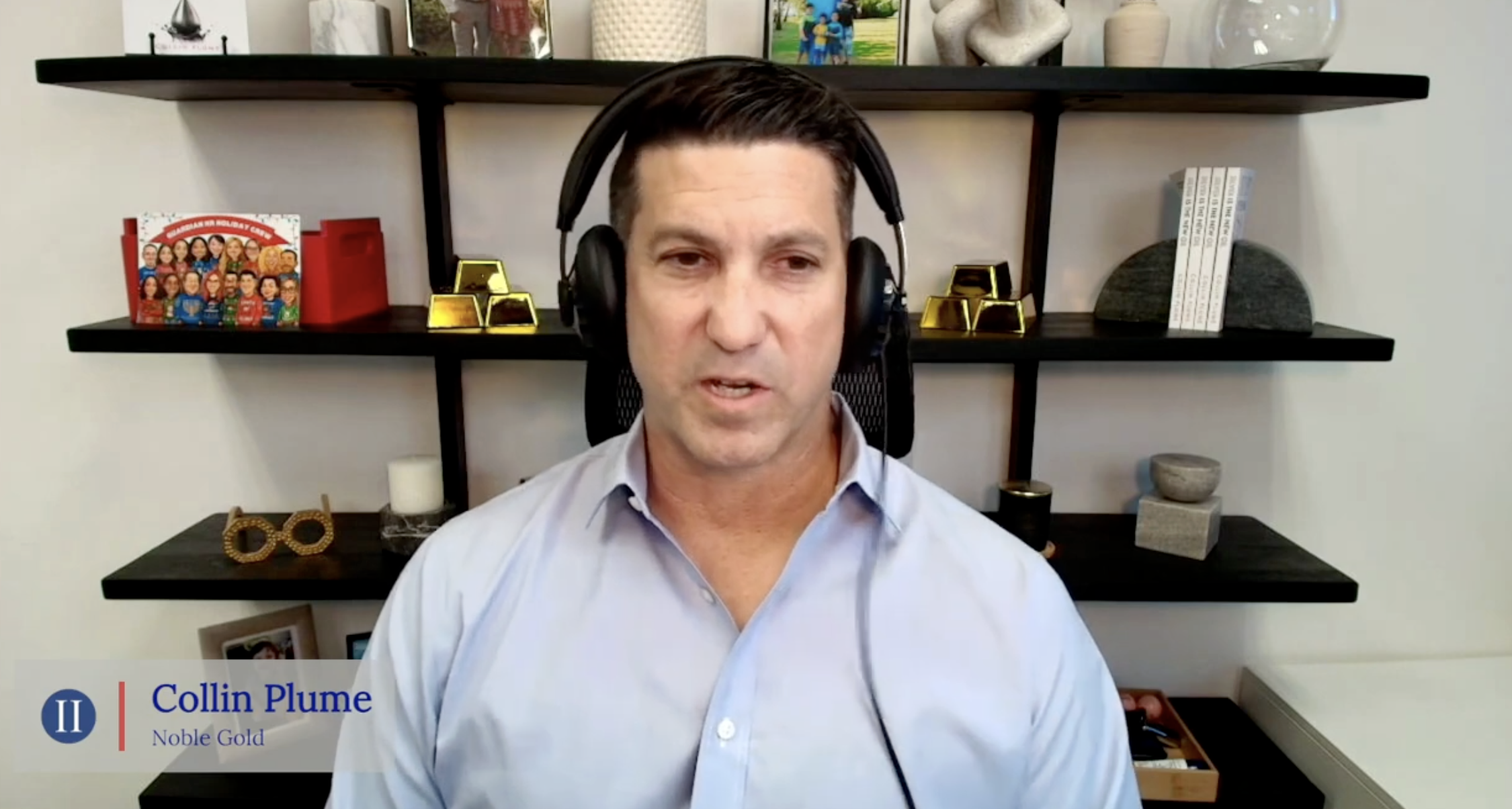
Collin Plume on IncomeInsider TV
As the conversation shifted from market mechanics to human behavior, Collin zeroed in on what he sees derail more decisions than any chart or headline: emotion...
When prices surge, people worry they’ve missed the move. When prices pull back, fear takes over. The result is often the same. Paralysis. Waiting for the “perfect” entry that never quite arrives.
Collin explained that he’s seen this pattern repeat for nearly two decades. In his experience, people who successfully incorporate gold and silver into their plans usually don’t do it because they timed a bottom perfectly. They do it because they understood why they wanted the asset in the first place.
He shared an analogy that stuck. One of his long-time buyers views gold and silver the way homeowners view insurance. You don’t buy insurance because you expect something bad to happen tomorrow. You buy it because the cost of rebuilding rises over time, and protection becomes more valuable as uncertainty grows.
Using that lens, the question isn’t “Did I miss the dip?” The question is “Has anything changed that makes this protection unnecessary?” In Collin’s view, declining confidence in fiat currencies, rising debt, and growing systemic complexity all argue the opposite.
For retirement savers, his advice was simple. Zoom out. Think in five- and ten-year windows, not five-day ones. Nobody gets the timing exactly right, but long-term discipline matters far more than short-term precision.
Concentration Risk and Why Diversification Matters More NowAnother theme Collin kept returning to was concentration risk, particularly inside retirement accounts.
He noted that a large portion of retirement wealth is now tied to a relatively small group of dominant companies, especially in technology and AI. While innovation has driven strong returns, it has also concentrated risk in ways many savers don’t fully appreciate.
Markets rarely move in straight lines. When too much capital flows into a narrow set of ideas, the downside can be just as dramatic as the upside. That reality, in his view, strengthens the case for holding assets that don’t depend on earnings reports, product cycles, or government bailouts.
Gold and silver don’t need to outperform stocks every year to justify their role. Their value comes from behaving differently when traditional assets stumble or when confidence wavers.
Collin emphasized that diversification isn’t about predicting which asset will win next. It’s about making sure you’re not forced to sell the wrong thing at the wrong time. Having multiple levers to pull in retirement creates flexibility, especially during uncertain periods.
Physical Metals vs Paper Metals: What Are You Actually Owning?
One of the most practical parts of the discussion was Collin’s breakdown of physical metals versus paper-based exposure.
He explained that ETFs, futures contracts, and mining stocks can all provide exposure to metals prices, but they come with layers of counterparty and operational risk. Contracts assume the underlying metal exists and can be delivered. Mining stocks depend on management decisions, costs, and broader market sentiment.
Physical metals are different. When you own bullion, you own the asset itself. There’s no promise from a third party that has to be honored for the value to exist.
Collin pointed to recent examples where large buyers attempted to take delivery on contracts, only to find supply was tighter than expected. Situations like that highlight the difference between owning exposure and owning metal.
For people who trade or hedge short-term, paper products may serve a purpose. But for those using metals as a hedge against systemic risk or currency devaluation, Collin believes physical ownership aligns better with the original reason people turn to gold and silver in the first place.
That distinction matters most during periods of stress. The very moments that push people toward metals are often when paper claims are tested.
Gold vs Silver: Why Many People Own Both
When asked how to choose between gold and silver, Collin’s answer was straightforward. Most people don’t choose one or the other. They own both.
Gold, in his view, serves as the foundation. It’s scarce, widely recognized, and heavily held by central banks. If confidence in currencies erodes, gold is often the asset institutions turn to first.
Silver brings a different dynamic. It’s more volatile, but it also has greater upside potential because of its industrial and strategic uses. When demand accelerates, silver tends to move faster and harder than gold, in both directions.
Collin noted that many portfolios naturally settle into a balance over time. Early on, some investors lean more heavily into silver for growth potential. As prices rise, allocations often rebalance closer to an even split.
The key point wasn’t about finding the perfect ratio. It was about understanding the role each metal plays and why combining them can create a more resilient overall position.
Related: Request Your Copy of Noble Gold's Free Gold & Silver Guide
Scams and Red Flags Every Buyer Should Know
One of the most valuable parts of the conversation was Collin’s candid discussion about the darker side of the gold industry. According to him, most bad outcomes are avoidable if people know what to watch for.
The biggest red flag he sees is the promise of “free” gold or silver. Offers that advertise $10,000, $15,000, or even $20,000 in free metals sound generous, but Collin explained how they usually work.
The cost is baked in elsewhere. Coins are marked up far beyond reasonable levels, sometimes by 50 percent or more, making the free metal anything but free.
Another warning sign is urgency. If a company pressures you to act immediately, claims an offer is expiring, or uses fear-based tactics to rush a decision, Collin says that should trigger skepticism. Retirement savings decisions deserve time and clarity, not pressure.
He also advised paying attention to how you are treated during early conversations. If questions are brushed aside, pricing is vague, or you feel talked down to, that behavior rarely improves after money changes hands.
His advice was simple and practical. Take your time. Read reviews. Check third-party ratings. Talk to more than one company if needed. Any reputable dealer should respect your pace and welcome questions.
Gold IRA or Home Delivery? How to Think About the Difference
Another common point of confusion is whether to buy physical metals for home delivery or through a Gold IRA. Collin emphasized that the metals themselves are the same in both cases.
In either scenario, buyers are typically purchasing bullion coins or bars with high purity and tight pricing relative to spot. The difference comes down to where the money is coming from and how the metals are held.
Home delivery usually involves cash savings outside of retirement accounts. Metals are shipped directly to the buyer, who is responsible for storage, often in a personal safe. This option appeals to people who want direct access and ownership outside the retirement system.
A Gold IRA uses tax-deferred retirement funds such as a 401k rollover or existing IRA. The metals are purchased within the IRA structure and stored at an approved depository. The advantage is that the investment remains tax deferred while still providing exposure to physical metals.
Collin noted that many people ultimately do both. They use a Gold IRA for part of their retirement savings and also hold some metals personally. The right approach depends on timing, proximity to retirement, and how existing assets are allocated.
Related: Gold IRA Fees Explained
Common Mistakes to Avoid With 401k Rollovers
Because rollovers involve retirement funds, Collin stressed the importance of following the rules carefully.
He outlined two basic eligibility conditions. A rollover is generally allowed if you are no longer with the employer sponsoring the 401k, or if you are over age 59½. Meeting one of those conditions allows the funds to be moved into an IRA without triggering taxes or penalties.
Where people get into trouble is trying to handle the process without guidance. Missing deadlines, moving funds incorrectly, or taking possession of money even briefly can create unexpected tax consequences.
Collin recommended viewing the rollover as a transfer between qualified accounts rather than a withdrawal. When handled properly, the money never leaves the retirement system. It simply moves into a structure with more flexibility and control.
Even beyond precious metals, he believes rolling old 401ks into IRAs often makes sense. Fees tend to rise once employment ends, and investment options are usually limited. An IRA gives savers more choice and visibility into how their money is allocated.
Security, Storage, and Avoiding Pricing Traps
Security is another concern that stops many first-time buyers. Collin walked through what buyers should expect when metals are shipped.
Packages are sent discreetly, require signatures, and are tracked closely. Buyers are encouraged to open shipments immediately, inventory the contents, and match everything against receipts. That process ensures accuracy and peace of mind.
When it comes to storage, he cautioned against assumptions. Safety deposit boxes are not insured and are not always as accessible as people expect. Many banks also discourage storing precious metals there. For home delivery buyers, a secure home safe is often the preferred option.
On the pricing side, Collin urged new buyers to avoid specialty or rare coins pitched as exclusive opportunities. While numismatic coins can be interesting for collectors, they are usually not the most efficient way to build value. Bullion coins and bars tend to track metal prices more closely and are easier to evaluate.
His bottom line was consistency. Most people who have done well over time stuck with simple, widely recognized bullion rather than chasing novelty or marketing hype.
Practical First Steps
As the conversation wrapped up, Collin returned to the idea of education over urgency.
Gold and silver are not decisions to rush. They are decisions to understand. For those feeling uncertain, the first step he suggested was simply learning. Talk to someone knowledgeable. Ask questions. Review information. See if the approach aligns with your goals and risk tolerance.
Volatility will come and go. Headlines will change. What matters most for retirement savers is having a plan that does not depend on perfect timing or perfect predictions.
For readers interested in taking that next step, Collin has created a free Gold & Silver Guide available directly on Noble Gold's website.
Protect Your Wealth with Gold & Silver
Free Guide Reveals Strategies to Buy Physical Gold & Silver with Your IRA or 401(k).